March 10, 2015 by Danielle de Valera

Just as in every short story collection there’s usually one that causes the writer a great deal of difficulty, I imagine there’s also one the writer likes above all the others. This is certainly the case with me. “The Cyborg’s Story”, originally published as “Roses” is definitely my favourite short story—of the ones I’ve written, that is. My favourite short story ever is “Catman”, by Harlan Ellison, a wonderful story, which incidentally has nothing really to do with cats.
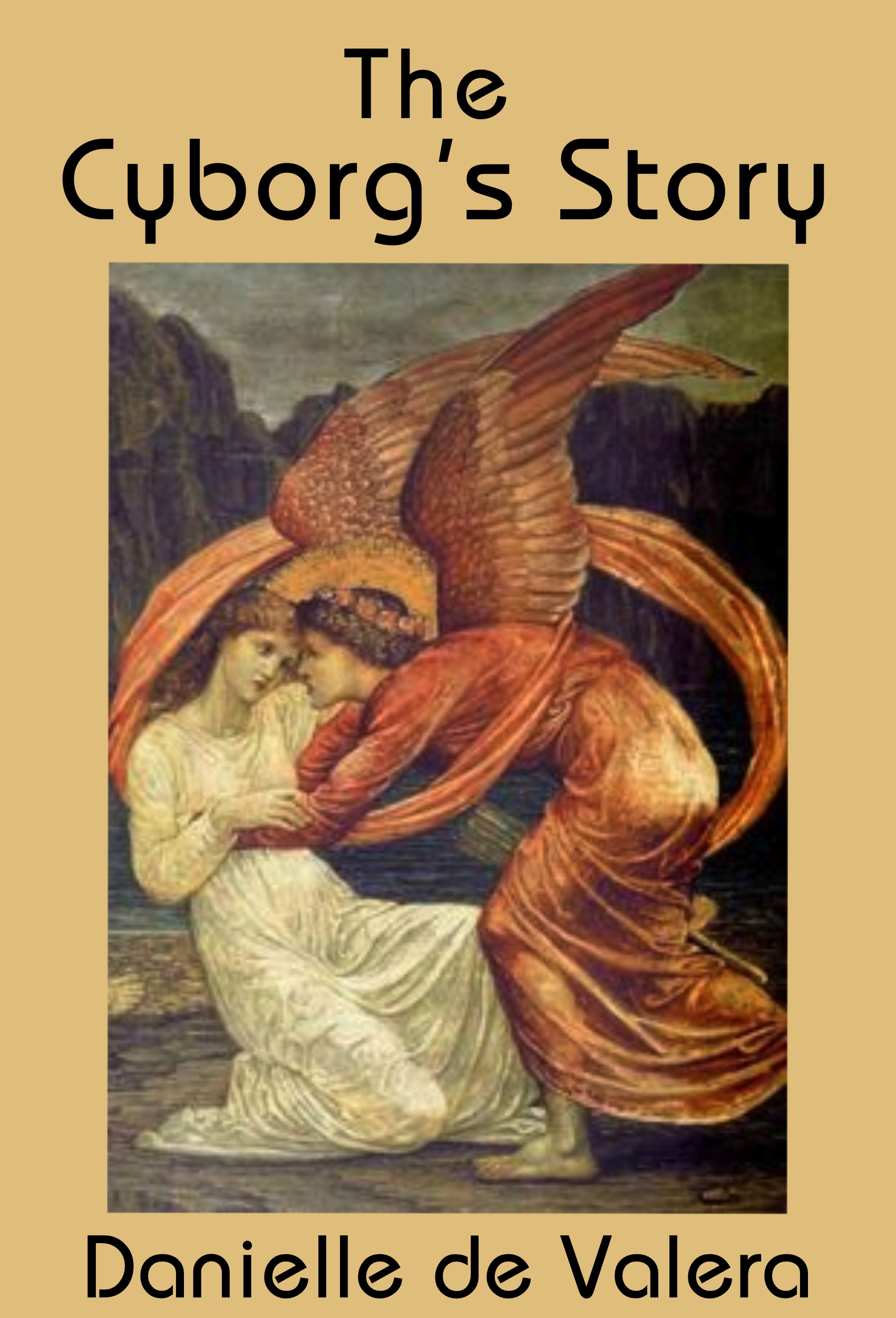
Published in the Australian sci-fi/fantasy magazine Aurealis in 1999, “Cyborg” tells the story of Michael 64, a winged cyborg security expert hired by Thurston, the human Director-General of Genetic Engineering, to guard Azuria 27, a famous winged cyborg dancer, whom Thurston has operated on so that she can pass for human. Such a procedure is illegal in 2175, the year in which the story is set. Azuria is secretly in love with a man called Elliott. She thinks she is making the change for love, but Thurston has much bigger plans; he is a man who believes that humans are merely a link in the evolutionary chain towards cyborgs. Michael, who starts out in the story as a hardened security expert addicted to Blue Monday, an off-world drug imported illegally at exorbitant cost, ends up in love with Azuria and saddled with the problem of whether or not to out Thurston and his plan for cyborg supremacy.
I had a heck of a time getting this story published in Aurealis in 1999. Dirk Strasser, the editor, had a strict 6,000 word policy for submissions, and the story was 7,000 or thereabouts. He wouldn’t budge as a matter of principle, although he liked it. I sweated some more and managed to get it down to where it is now: 6,350 words. Beyond that, I couldn’t go; I was right down on the bones of the story. Desperate, I sent it back to Dirk, with 6,000 words printed on the title page, and he accepted it. Whether he knew it was really longer, I’ll never know, but honour had been satisfied and the story then called “Roses” saw the light of day. It’s the only sci-fi story I ever wrote. Or ever will.
It’s a very soft story, a mix of love story and mystery. Perhaps that’s why I like it so much. I get bored very quickly with most genre writing, demanding as it does a devotion to straight line narrative, and often lacking any sense of something bigger, particularly in the area of characters and their relationships.
Anyway, here is is, my favourite of them all: “The Cyborg’s Story” aka “Roses”. Only one more to go and I will be able to start working on the collection. “Cyborg” is available for 99c at:
Smashwords: https://www.smashwords.com/books/view/524901
and Amazon: http://www.amazon.com/dp/B00UE3NKHI
I hope you like it as much as I do,
Dani
Posted in Amazon KDP, Australian editors, Australian writers, e-books, Far North Coast of NSW, Fiction writers, genetic engineering, Harlan Ellison., Indie authors, Kindle, new writers, stories about cyborgs, The Cyborg's Story, the writing process | Tagged Aurealis, Australian indie writers, cyborgs, Danielle de Valera, Dirk Strasser, genetic engineering, stories about cyborgs, The Cyborg's Story | Leave a Comment »
February 14, 2015 by Danielle de Valera

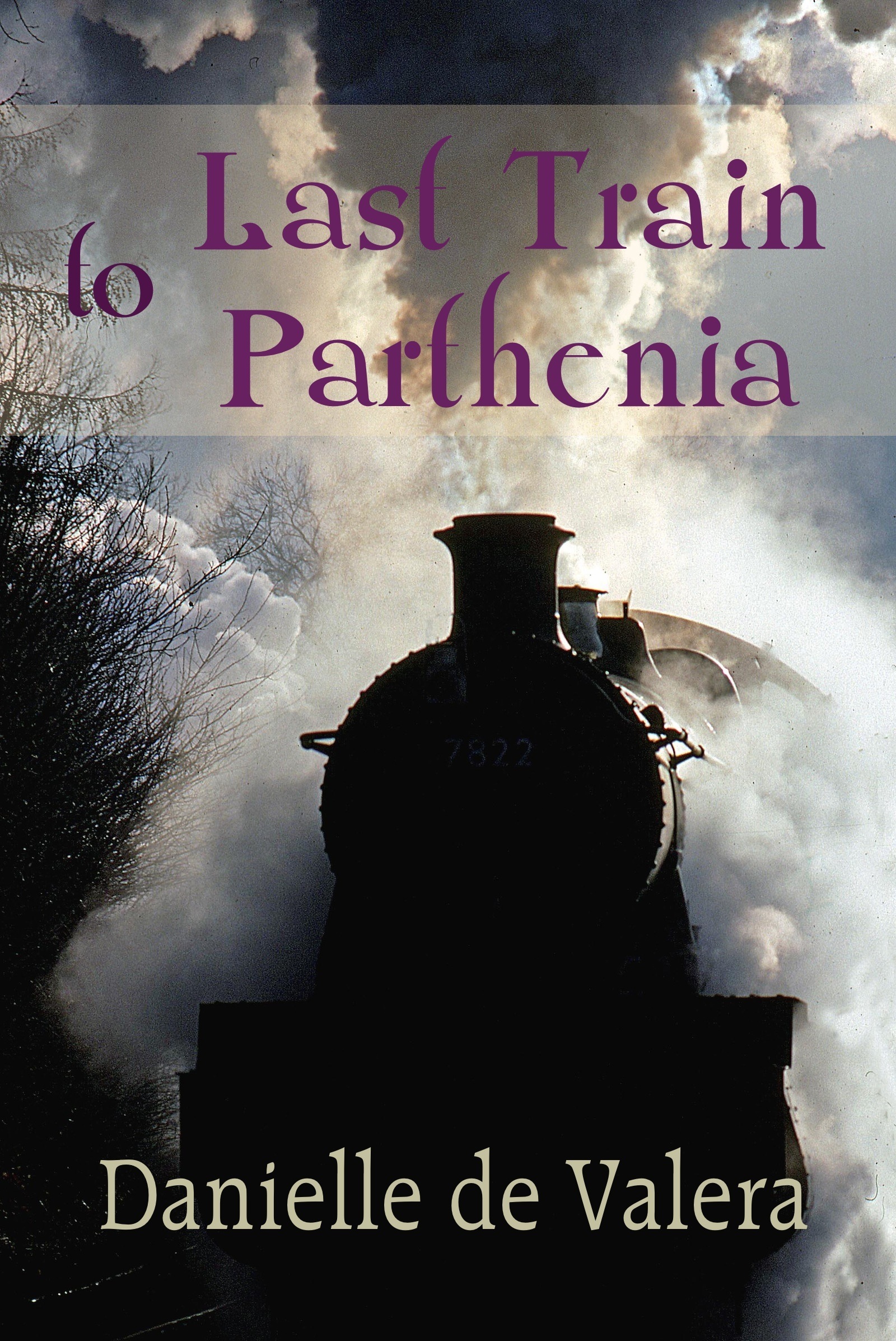
In every collection of short stories I imagine there’s always one that causes the author real problems. This was certainly the case with me. “Last Train to Parthenia”, a death trip story, caused me more problems than all the rest put together. Maybe it was the considerable length of 8,500 words; I don’t usually work in that length, preferring a shorter one of around 5,000 words. Maybe it was the story itself, I don’t know. I just know the thing caused me all sorts of problems, and took about three times longer to perfect than any of the other stories I’ve so far put up. In its various incarnations, I ran it past three different readers (two male, one female) none of whom liked the early versions or got what I was trying to convey. I had opted for subtlety, you see, but clearly that wasn’t going to work. I ended up having to spell the darn thing out far more than I had intended, and I hope that, in the collection coming out at the end of the year , where there’ll be a print book, I can pull back a little again in favour of subtlety. I have always preferred mystery to explicitness — which is why porn leaves me cold, I guess.
The story Unhappily married, Bob Johnson has taken a night job working on the inner-city circle of StateRail, Sydney. He is a man who has always sought escape from reality in sword and sorcery magazines. His great favourite is the work of Robert E Howard, ill fated author of the Conan novels (dead at 30 by his own hand http://en.wikipedia.org/wiki/Robert_E._Howard). One night Johnson finds a pewter bracelet on the railway tracks. He decides to keep it, regarding as a lucky talisman—an amulet. A few nights later, while at work, he is hit by a train. In the last seven minutes of his life, before his brain shuts down, he imagines that, through the magic power of the amulet, he has been transported to a romantic world full of broadswords, intrigue and glamorous women.
Anyway, here is the darn thing, and am I glad to be finally leaving it behind me. It’s now around 7,500 words long and available for 99c at:
https://www.smashwords.com/books/view/515862
http://www.amazon.com/dp/B00TGIVXAI
I hope you enjoy it. Oh, and the very best to you all for the Year of the Sheep, Dani
Posted in Australian writers, C S McClellan, Danielle de Valera, e-books, Far North Coast of NSW, Fiction, fiction authors, Fiction writers, Indie authors, Indie publishing, last minutes of life, north coast of nsw, photographer, railway accidents, Short stories, stories about pople facing death, sword & sorcery stories, Sydney | Tagged Inner-city circle StateRail Sydney, John Beresford photographer, nightshift work, north coast of nsw, photos of trains, railway accidents, Robert E Howard, steam trains, sword and sorcery stories | 6 Comments »
December 12, 2014 by Danielle de Valera

When the children were in high school, I found myself with a bit of time on my hands. I lived in a small country town, jobs were hard to get, so I decided to try to make some some money writing short stories. I was working in the dark. Although I’d written a novel and had a few articles published in newspapers, I didn’t write short stories; I’d always thought of myself as a long distance writer. Still, as they say (or used to say), Needs must when the devil drives. I tried the Women’s Weekly first, but I had no luck. I didn’t understand at that stage that you need to study the publication you’re aiming for to get a feel for both the style and the kind of content the editor likes.
With no luck there and the need for money still pressing, I turned my attention to the men’s magazines. Here I was lucky: my partner Gianni Cosatto bought a Penthouse every month. Strictly for the articles, you understand. For a year I clawed my way past crotches and garter belts every month and studied the particular likes of the then editor, Phil Abraham. He was publishing one story per issue, good quality stuff of around 5,000 words by such Australian luminaries as Susan Geason, Peter Corris, Roger Raftery, etc. After trying a few different stories on Phil, I finally struck it lucky with “Transference”, a 4,500 word story about a man who becomes obsessed with his wife after she leaves him, goes to a therapist for help and ends up becoming obsessed with the therapist.
It was my first ever published story, and a monument to the technique of studying the publication you’re aiming for. The money was considerable for those days, and caused us much excitement. We went straight out and bought a VCR and mainlined movies all through that summer. My mother, who lived with us, was still alive in those days, so she was able to enjoy the largesse—a fact that, even today, gives me pleasure.
Well, there you have it. There’s nothing dubious or smutty in “Transference”; Phil Abraham wasn’t that kind of editor. It’s light with a heavier undertone. It should make good holiday reading, and is available at:
https://www.smashwords.com/books/view/497498
http://www.amazon.com/dp/B00QUDR8OC
The beautiful image that forms the cover is by ejimac. You can see more of his stunning work at:
http://www.deviantart.com/browse/all/digitalart/fractals/?q=ejimac
Best wishes to you all for Christmas and the coming year,
Dani
Posted in Amazon KDP, anecdotes, Australian writers, Danielle de Valera, Far North Coast of NSW, Fiction, fiction authors, Indie authors, Indie publishing, north coast of nsw, psychological stories, Short stories, the writing process, transference | Tagged Danielle de Valera, deviant art, ejimac, far north coast of NSW, fractal artists, north coast of nsw, obsession, short stories, transference, writing process | Leave a Comment »
November 13, 2014 by Danielle de Valera

What with the remaining cat’s veterinary bills, things are a bit tough financially, but they used to be tougher back around the turn of the millenium. At that time the local paper, the Byron Shire Echo decided to hold a competition for a short story of less than 1,000 words. The winning entry would receive publication in the Echo and prize money of $1,000. Needless to say, I decided to have a go. To my absolute surprise, I was lucky enough to win with “A Happily Married Man’, which told the story of a young man who thinks he’s had a message from God to eliminate the man his wife has left him for.
That was in 1997.
Next year, I decided to try again. This time I wrote about a single mother who’s life is threatened by a jilted lover with a shotgun. I called it “The State of Grace”, to try to explain the sense of calm that came over the her in the end, after she realises she is going to die. I didn’t hold out much hope for the story, but they were judged blind and to my amazement, I managed to win again. Now that’s what I call luck. It kind of made up for all those years of rejections. (I sometimes wish I’d kept my rejection slips; I really could’ve papered a wall with them.)
That was in 1998.
In 1999, Shelley Jackson of Lismore ran a fiction competition for women on the north coast of New South Wales. I was on a roll, so I tried again. The story I entered was called “The Sunflowers”. It was about a woman who’s been married for years to a husband who is physically abusive, but she won’t leave him. Finally, a particular incident involving gardening makes her decide to go. Again, I was lucky.
And there my remarkable streak of luck more or less ended. After that, I concentrated on writing novels and on getting stories published in magazines to improve my literary CV. In those days, you sent the publishers your novel extract by post, along with a pleading letter and what was called a literary CV. A good literary CV might sway editors in your favour. It seemed like a sensible idea to concentrate on this. As the song says, “Know when to fold’ em. Know when to walk away, Know when to run”.
Being only 1,000, 1,000 and 1,500 words respectively, the three stories described above were too short to publish separately on the web, so I’ve put them together in a bundle of 3,575 words called “Trio”. In the short story collection I’m hoping to put out in 2015, these three stories won’t run together as they do in “Trio”, but will appear separately in various places through the book. Anyone reading them to discover the fate of the four main characters in the collection (O’Neill, Johnson, Lawson and Star) needs to bear this in mind.
Trio” is FREE at Smashwords in three formats: EPUB, mobi (for Kindle) and pdf.
https://www.smashwords.com/books/view/492081
PS Many thanks to the people who’ve taken the trouble to review the stories I’ve put up so far. Reviews are necessary to sell anything on the web, so your kindness is very much appreciated.
A note on reviews:
Making life even more difficult for indie publishers, Amazon, the giant in this business, responsible for approximately 70% of all internet book sales, does not link its sites together where reviews are concerned. A review placed on the Australian Amazon site will not appear on the US Amazon site for the same book, or the UK’s —or any other Amazon site, for that matter. You would expect that one review would show up across all of Amazon’s sales sites, but it doesn’t. As it would be a dementing business for well wishers to copy and paste their reviews over all the sales sites, I would suggest placing your review where you think it will do the most good.
Posted in Amazon, anecdotes, Australian writers, chance, Danielle de Valera, delusional thinking, domestic violence, Far North Coast of NSW, Fiction, fiction authors, Indie authors, Indie publishing, mental illness, north coast of nsw, Short stories, Stories about domestic abuse, stories about pople facing death | Tagged Danielle de Valera, delusional thinking, domestic abuse, far north coast of NSW, mental illness, north coast of nsw, people facing death, short stories | 2 Comments »
October 27, 2014 by Danielle de Valera

One day in 1989, when I was struggling with the first draft of “Transference” (eventually published in Penthouse), my good friend and ex, Gianni Cosatto, strode into my house and plonked three handwritten foolscap pages down on the kitchen table.
“There you are,” he said. “I’ve written the first scene of a story for you.”
I picked up the pages and scanned them. The scene was written from the 1st person point of view. It seemed to concern a man who’s sent to a planet called Gerar to check the authenticity of a coin found there. As he sits in Reception, still shocked from the hyperspace, this gorgeous chick with long red hair comes out of an internal door and is rude to him. I gathered that rudeness was a turn-on for this hero, who immediately decides to fall in love with her. End of scene.
“What else happens?”I asked Gianni. “I mean, What’s the story?”
“Dunno,” said Gianni, “I just wrote the first scene. You’re the writer.”
“Well, thanks,” I told him. “I’ll have a crack at it later.” I might as well have said: I’ll bury it later. I had no intention of having a crack at it. I pleaded busyness whenever Gianni enquired about it in the years that followed.
One rainy day in the twenty-first century, long after Gianni had died, I found the story in a drawer and decided to try to finish it. Seductresses with long red hair didn’t interest me, so I made it a gay story. But it never really worked. Sci fi mags I submitted it to were put off by the gay relationship; mags that might’ve been interested in the relationship were put off by the sci-fi angle. I was stuck with it. One day, I realised that the the idea of finding a coin on Gerar or anywhere else, for that matter, was so preposterous a plot I might as well set the story in Australia. I chose Maralinga, with its interesting history of British A-bomb explosions in the late 1950s and early ‘60s.
So here it is. I’ve recently worked it over yet again to fit the Charles Lawson thread in the short story collection I’m building, tentatively entitled North Coast Stories. It’s 5,885 words long and available for 99 cents at:
http://www.amazon.com/dp/B00OQAB7UW
https://www.smashwords.com/books/view/485382
Whatever misgivings I might still entertain about the story’s far-fetched plot, I’m immensely happy with the cover, which author C S McClellan created from a recent photograph of Maralinga country by Baz Landy.
For those who are interested, below is a recap of where we’re up to now in the North Coast Stories collection:
- Busting God
http://www.amazon.com/dp/B00J8ZIE8S
https://www.smashwords.com/books/view/416303
- Remains to be Seen
http://www.amazon.com/dp/B00LNDWRM2
FREE at https://www.smashwords.com/books/view/454352
- Stella by Starlight
http://www.amazon.com/dp/B00MTVVG96
https://www.smashwords.com/books/view/467119
- Star’s Story
FREE at: https://www.smashwords.com/books/view/479505
- The Real Thing
http://www.amazon.com/dp/B00OQAB7UW
https://www.smashwords.com/books/view/485382
Posted in Australian writers, Baz Landy, betrayal, C S McClellan, Danielle de Valera, e-books, Far North Coast of NSW, Fiction, fiction authors, Maralinga, north coast of nsw, resilience, seduction and betrayal, Short stories, stories about coin fraud, stories about numismatics, stories of betrayal, Stories set in Maralinga, the writing process, Writing | Tagged Baz Landy, C S McClellan, Danielle de Valera, far north coast of NSW, gay stories, Maralnga, north coast of nsw, seduction and betrayal, Shrot stories, the writing process | Leave a Comment »
September 28, 2014 by Danielle de Valera

Star’s Story—the genesis
Sometime around 2004, when I was on the Aged Pension and a more assured income, I had a little time to experiment. I wanted to see if I could get into Meanjin, the foremost literary journal in Australia. I had something of a knack for styles. If I could get hold of enough back copies of a magazine, say ten, I could usually nail down the style their story editor liked. I’d done it with Penthouse and the Women’s Weekly—why not Meanjin? Unfortunately, I could only afford to buy one copy; the pension doesn’t pay that well, and business wasn’t booming at that point in time.
I had always found the stories in Meanjin rather mystifying, and downright inaccessible at times, so I constructed a rather post-modern story with flashbacks and time jumps that weren’t always sequential. Should be inaccessible enough, I told myself. I ended up with a piece of around 3,000 words, which I called “No Through Road”.
I didn’t send it off to Meanjin straightaway, ah no. In my experience, the best way to pick up a little lucre was through competitions. I chose two which had well established writers as judges (one was Frank Moorhouse) and a first prize of $1,000AU. Even getting shortlisted in one those would help to get a more sympathetic reading from the editor of Meanjin.
I was lucky, though I never hit the jackpot. “Road” was shortlisted in the prestigious My Brother Jack short story competition in 2004 and in the equally prestigious Hal Porter in 2006. Right, I thought, now for Meanjin. So I sent the story off – in those days, you still sent manuscripts through the post – and waited. And waited. Eventually I got a lovely rejection letter from the ed, saying that although the piece had almost made it, they had decided not to take it up.
Well, it wasn’t bad for a first time, and I’d only had one copy to study; I’d do better next time, I thought. Then the internet hit us, and I began to consider publishing on the web. I saw in it a way to obtain print copies of all my work to safeguard when I was gone. Better than leaving the manuscripts to moulder in the tin trunk, I figured. I live in the sub-tropics, it’s very humid, I was worried about how long they’d last. Maybe I could be discovered posthumously and the grandchildren would make a fortune. So probably goes the thinking of millions of indie writers.
To return to the point: I changed the title of the story from “No Through Road” to “Star’s Story” to make it easier for anyone following these stories on the web as they come out. Publishing serially like this, I think you need to remind readers of where you’re up to in the collection. Which I’ll publish next year. I also changed the point of view from 1st person to 3rd; the thing seemed just too confronting in 1st.
Because it’s only 3,000 words long, it’s FREE in three formats at Smashwords. (Amazon won’t let writers sell their stuff for free unless they join Amazon’s KDP Select, and then only for 5 days out of every 90.) I’d love some feedback on the cover, love it or hate it. I could also do with a couple of reviews of this story as it’s unlikely to garner anything favourable from the general population, it being so literary and post-modern, hem hem. The link is: https://www.smashwords.com/books/view/479505
Below is a recap of where we’re up to now in the collection:
- Busting God
http://www.amazon.com/dp/B00J8ZIE8S
https://www.smashwords.com/books/view/416303
- Remains to be Seen
http://www.amazon.com/dp/B00LNDWRM2
FREE at https://www.smashwords.com/books/view/454352
- Stella by Starlight
http://www.amazon.com/dp/B00MTVVG9C
https://www.smashwords.com/books/view/467119
- Star’s Story
FREE at: https://www.smashwords.com/books/view/479505
Only another seven stories to go.
Posted in Amazon, anecdotes, Australian writers, Danielle de Valera, domestic violence, e-book frmatting, e-books, Far North Coast of NSW, Fiction, fiction authors, Fiction writers, hippies, Indie authors, Indie publishing, north coast of nsw, Publishing, Self-publishing, Short stories, the writing process | Tagged abortion, Amazon KDP Select, anecdotes, domestic abuse, domestic violence, ebooks, far north coast of NSW, hippies, indie writers, life scripts, north coast of nsw, short stories, the writing process | 6 Comments »
August 22, 2014 by Danielle de Valera

Nine years ago or thereabouts, the Australian Women’s Weekly ran a short story competition with a first prize of $5,000 and guaranteed publication in this most circulated of Australian women’s newspapers. Being a writer and thus financially on the rocks (I figure I’ve made about $8 a week from my writing over the last 20 years, and that’s a high-end estimate), I decided to enter. I didn’t expect to win, but I thought there’d probably be a short list and the stories on that would be offered publication. And the Women’s Weekly pays, baby, pays.
So I sat down and sweated out a story of 5,000 words and sent it off. Months passed. Eventually the result was announced, but Danny Margaret had scored zero, zilch, and there didn’t appear to be a short list. Well, I thought, so much for that, and I put the story away in the proverbial bottom drawer.
Five years went by. One day (I must’ve had nothing better to do, perhaps it was the wet season) I pulled the story out and reread it. It’s not bad, I thought. Very Women’s Weekly – what a shame it didn’t get anywhere … Then I remembered Australian writer Marele Day saying once in a writing workshop that magazines were always looking for Christmas stories. They were drowning in the other kind, she said; but they were always short of Christmas stories. Hmm, I thought.
At the time my finances were in worse-than-usual disarray. Publication in the WW would sort all that out. O-kay. There was just one hitch: My story wasn’t a Christmas story. To solve this problem, I had the main character’s daughter refer to Christmas in an already-existing phone conversation and I had two people the main character passes on her way to the beach wish her a Merry Christmas. That’s all I did.
By now, my CV had filled out, and I had a little more confidence than I’d had in earlier years. I approached the editor of the Women’s Weekly by email, gave her my CV and a 3-line synopsis of the story and asked if she’d be interested in reading my “Christmas story”. Next thing I know I’m being offered publication in their 2010 Christmas edition.
The moral of this monologue is: If you put a short story in a competition and it doesn’t get anywhere, that doesn’t mean anything. What matters is being published. Craig McGregor told me this way back in 1979, but I didn’t take any notice. Besides, being a single parent, I needed the money that comps could provide.
Now here is “Stella by Starlight” minus the Merry Christmases. I’ve also made one other change, transforming the main character from female to male, to fit the story into the collection I’m publishing next year. Everything else, though, is the same, and the theme and moral of the story are unchanged.
Sales points for “Stella” are below. I hope you enjoy it. I wish I could provide a direct sales link to Apple, but I’m digitally disadvantaged.
http://www.amazon.com/dp/B00MTVVG9C
https://www.smashwords.com/books/view/467119
Posted in adversity, aging, anecdotes, attempted suicide, Australian writers, Blindness, cat lovers, cats, Courage, Danielle de Valera, domestic violence, e-books, Far North Coast of NSW, Fiction, fiction authors, Fiction writers, Indie publishing, macular degeneration, north coast of nsw, Publishing, resilience, Short stories, struggling writers, suicide, the writing process, true stories, Writing | Tagged aging, anecdotes, blindness, cat lovers, Cats, Craig McGregor, Danielle de Valera, domestic violence, macular degeneration, Marele Day, north coast of nsw, short stories, struggling writers, writing process | Leave a Comment »
August 10, 2014 by Danielle de Valera
Back in the 1970s when my son was two, his father gave him a large book entitled The Cat Catalogue. This was a most comprehensive book. A4 in size, it covered each breed and contained chapters entitled ‘The Cat in Literature’, ‘The Intellectual Cat’, etc. At the beginning of each of these chapters was a full-page, black-and-white drawing of cats, each by a different artist. Out of all the drawings, the one that caught my eye was the drawing entitled ‘The Artistic Cat’. It was done by someone who signed himself Marty Norman.
When literary agent Rosemary Creswell retired without having placed my manuscript MagnifiCat with a traditional publisher, in spite of her enthusiasm for the work, I began to think of publishing the feel-good animal fantasy myself. Whenever I thought about the cover of the novel I was planning, my mind would return to the drawing by Marty Norman, which I’d seen in The Cat Catalogue. Luckily, I still owned the book – but how to find the artist? The book had come out in 1976. More than thirty years had passed.
This is where the web came in handy. But if you think I simply Googled the artist’s name and the rest is history, that didn’t happen. I couldn’t find Marty Norman. If you Google him today, you ‘ll find him easily, but in 2008, he was about as interested in the web as I was. I searched and searched – I even tried Facebook but I still couldn’t find him. There were a number of entries that might have been him. Eventually, I settled on one with a bio and dates that fitted my conception of the artist and sent him a Facebook internal email, explaining that I wanted to use the drawing from The Cat Catalogue for MagnifiCat’s cover and asking his permission. No reply. Seems he was as uninterested in Facebook as I was.
Years went by. I searched the web for an alternative image, but none came near the drawing by Marty Norman. I was obsessed, a lifelong problem of mine. I went back to searching for him. By now it was late 2011. With a friend’s help we tracked down a painting that might’ve been his in a gallery in, I think, New York, but there were no contact details for the artist. Although very different from the drawing I was obsessed with, the painting had the same surety of line that characterised Norman’s drawing for The Cat Catalogue. (See below.)
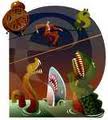
I didn’t let the very considerable difference in style put me off. After all, good artists — and this guy was good— were supposed to be versatile, weren’t they? Besides, all that time had gone by; he was bound to have changed his style. I wrote to the gallery, explaining my dilemma and asking them to forward my request to their Marty Norman. No reply.
By now, I had definitely decided to publish on the web. I stepped up the search, going back over the ground I’d covered in the past. In the Friends Facebook section of the person I’d thought might be the Martin Norman I sought, I found someone I figured was the son. In desperation, I wrote to him via Facebook, stating my problem. Wonder of wonders, he wrote back to me! His father was the artist I sought; he’d pass my email on to him, I would hear from his father shortly. In due time, Marty wrote back. Yes, he was the person, and he would let me use the image. And so the deal was done.
 Even today, I don’t like Facebook, and only go there if there’s a notification in my email, but I have to admit I would never have found Marty Norman in those days without it.
Norman’s enjoying an illustrious career. There’s a great photo and bio of him
at: http://www.saatchiart.com/martynorman Check it out. Below are two more examples of the work he is doing today:
 :
:
Dark Matter (painting) Prisma 4 (drawing)
If you’re interested in seeing more of Norman’s fine art, it can be viewed at:
http://martynorman-art.com/ or at the saatchi link above.
Posted in Agents, books about cats, cat lovers, cats, e-books, Fiction, fiction authors, Fiction writers, fine art, Indie publishing, MagnifiCat the novel, Martin Norman, Marty Norman, social media, US artists | Tagged books about cats, fine art, MagnifiCat the novel, Martin Norman, Marty Norman, US artists | 1 Comment »
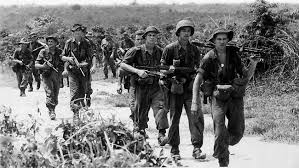
Australian soldiers in Vietnam
A long, long time ago when I was younger and my children were still in high school, my son fell in love with all things military. War was nothing new to me. I’d cut my teeth on WWII. My father went over the Kokoda Trial without a scratch – needless to say, he never said a word about it, except to my old Uncle Charlie, who’d been in the trenches in WWI.
With the star-struck son, it was different. I saw every Vietnam war movie ever made. I got to know the kinds of choppers used in Vietnam, and also in Korea — even what kinds of choppers the police were currently using to search for marihuana plantations in the hills in the northern rivers. I learned about post-traumatic stress disorder and what (and what not) to do about it. My son’s passion lasted around four years and fizzled out, thank heavens, before he was old enough to join the army. While it was still at tornado force, I bought him one Christmas a memoir by Colonel David H Hackworth (US Army), co-written with Julie Sherman and called About Face: The Odyssey of an American Warrior.

Hackworth was famous, and one of the most decorated soldiers who ever lived. Some people credited him with being the model for Colonel Kurtz, the role played by Marlon Brando in Francis Ford Coppola’s Apocalypse Now; others more reliably credited him with being the model for the gung ho commander of the helicopter unit immortalized in the movie by Robert Duvall. Hackworth did command a helicopter unit in Vietnam at one stage. His journey from all-American warrior (he lied about his age to get into the post-WWII occupying forces in Berlin at 15) to his public rejection of the Vietnam War in 1971 makes fascinating reading.


Unlike my son, I never fell in love with the military, but I did fall somewhat in love with Hackworth, and my little story “Remains to be Seen”, which was lucky enough to win the Ulitarra-Scheaffer Pen short story Award way back in 1993, is a kind of tribute to the man, although it is not about him. My formatting will always leave something to be desired, but the story (set half in the northern rivers, half in Vietnam) is now up on the web.

It’s FREE in three formats at Smashwords:
https://www.smashwords.com/books/view/454352 and it should be free on Amazon KDP, but so far they’re insisting on charging 99c for it. If you’ve got a dollar to spare, that’s at: http://www.amazon.com/dp/B00LNDWRM2
NB This is a good place to encourage anyone who likes the work to put up a review. Remember, it doesn’t have to be a contender for the Pulitzer Prize. Just 50 words will do, and (hopefully) a reasonable number of stars 🙂
Hackworth spent some of his later years in Australia, living in Brisbane and later in the country not far from here – another reason for my fascination, perhaps, though I suspect the real reason is that I just have a penchant for warriors. He died at the age of 74. The cause of his death is cited in some reports as bladder cancer, one of the many forms of cancer occurring with increasing frequency among Vietnam veterans exposed to the defoliants called Agents Orange and Blue.
Posted in Amazon KDP, Colonel David H Hackworth, Far North Coast of NSW, fathers, Fiction, fiction authors, Fiction writers, Indie authors, Indie publishing, north coast of nsw, post-traumatic stress disorder, Vietnam veterans, Vietnam war stories, war stories | Tagged Colonel David Hackworth, far north coast of NSW, military short stories, post-traumatic stress disorder, PTSD, Vietnam veterans, Vietnam war stories, war stories | 4 Comments »
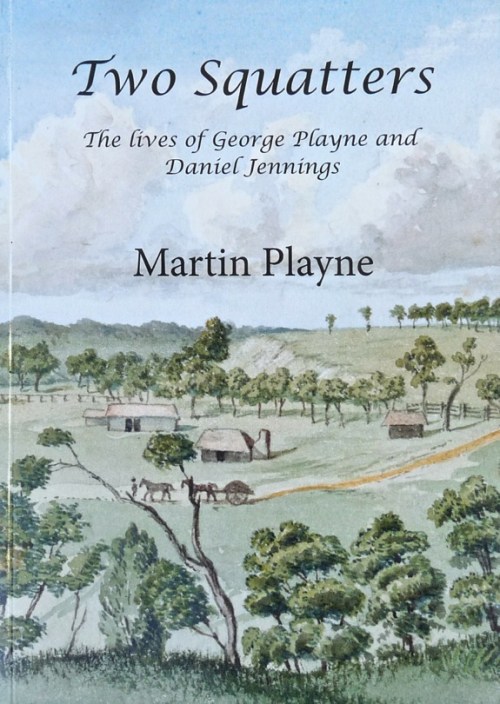
Thank you, Danny, for this kind invitation to write a little about my new book. It’s quite a contrast to MagnifiCat, your poetic and mystical work on Mullimbimby, which you recently released. I am still trying to work out how the two of us, who both trained in agricultural science, have come to writing works that have little to do with agriculture or science. Be that as it may, let me get serious and tell you something of my 432-page book, a social history.
Set in the 19th century, the book examines the lives of two men of contrasting personality. One, George Playne, was born in Gloucester to a poor family. His father was a saddler and harness-maker. His mother had come from Jamaica. He trained at the Gloucester Infirmary and later was appointed as Apothecary and House Surgeon. After some twenty-two years at the hospital, he suddenly decided to emigrate to Australia in 1839. Emigration to seek wealth may have been a prime reason for his decision; his friend and business partner, Daniel Jennings (who was wealthy) funded his travel.
In contrast, Daniel Jennings, was born in London and became a land agent and investor. He was always impetuous and eccentric in his behaviour. On arrival, he formed a business partnership with George, and purchased (for an alleged £10,000) the occupancy rights and the livestock to one of largest holdings in Victoria (around 200,000 acres with 10,000 sheep) called Campaspe Plains Station. He also invested heavily in both city and rural land in Victoria. He departed for Calcutta suddenly two years later, leaving behind his wife, and leaving George to manage the property at a time of deepening recession in the livestock industry. Two years later, he returned to the Colony with a new wife, and resumed his role as a gentleman squatter and investor. He left Victoria permanently in 1851 to retire to England. He was certified as a Chancery lunatic in 1865, and died in 1872, leaving a Will, which led to a legal dispute between his wife and his brother.
The Campaspe partnership between Daniel and George had been dissolved on Daniel’s return to Victoria in 1844 at George’s instigation. George then set up to practice medicine again in Melbourne. He became part of the colonial establishment, with important roles in lobbying for improved tenure for squatters, in the Melbourne Club (Secretary 1844-8), and in efforts to form a new colony separate from New South Wales (Secretary of the Separation Committee, and Joint Treasurer to the Delegate Committee), to establish a medical association and a hospital, and to form a new bank. He was a magistrate from 1843 until 1854. In 1850, he built one of the finest mansions in South Fitzroy. He had a strong influence on the development of a civilised society in Victoria. After 1851, his dream of a large city house, a gentlemanly existence, and a country property on the Mornington Peninsula was realized, but became impractical because of the shortage of labour after 1851 and the squalor and drunkenness when the gold rush started. He decided in 1854 to leave Melbourne and return to England.
These two men epitomize many early settlers whose contributions have been barely recognised by historians. To read more about them and the early devlopment of Victoria, or to obtain a copy of this book, go to:
http://www.bookstore.bookpod.com.au/p/8759432/two-squatters—the-lives-of-george-playne-and-daniel-jennings.html
Posted in Australian writers, e-books, Two Squatters by Martin Playne | Tagged Australian history, family histories, Martin Playne, non-fiction, Two Squatters by Martin Playne, Victorian history | Leave a Comment »
« Newer Posts - Older Posts »







 Danielle de Valera